


Your cart is empty.
Click here to purchase!
Blog
Wound healing supplements – What should you use after major injuries?

18.05.2026
10:38
The body’s regeneration processes are extremely complex: reducing inflammation, collagen formation, the development of new blood vessels, and tissue rebuilding are all nutrient-demanding processes. Modern research suggests that certain micronutrients, amino acids, and specialized formulas can significantly accelerate healing – especially in the case of larger cuts, burn injuries, or bone fractures.

Wound healing – how does it happen?4
Wound healing is a highly complex, multi-stage biological process in which the body defends, clears, rebuilds and fine-tunes at the same time.
There are three main stages, each with different nutritional requirements.
- the inflammatory phase (0–3 days),
- the proliferative phase – building new tissue (3–21 days),
- and the remodelling or maturation phase (from day 21 up to 1 year).
-
Inflammatory phase – the body’s “firefighting” response
This phase is not bad, nor is it “harmful inflammation”; it is a necessary part of healing. However, if it is too short or too prolonged, the wound may not heal properly.
Nutrient needs in this phase:
- Antioxidants (vitamins C and E)
- Zinc
- Omega-3 fatty acids (to help regulate inflammation)
- Protein and amino acids (for immune cell function)
-
Proliferative phase – new tissue is built
This is the “construction” phase of wound healing. It usually starts around day 3 and can last for 2–3 weeks. It involves collagen production and the growth of new blood vessels. This is when the wound closes, fills in and stabilises. If the body does not receive enough protein, vitamin C, zinc or amino acids, collagen production slows down.
Nutrient needs in this phase:
- Vitamin C (collagen formation)
- Zinc (cell division)
- Arginine (nitric oxide → improved blood flow)
- Glutamine (energy source for rapidly dividing cells)
- Protein and essential amino acids
- Copper (for collagen cross-linking)
-
Remodelling phase – the tissue becomes stronger
This phase can last up to 12 months. Collagen fibres reorganise and strengthen. The wound gradually regains tensile strength, although it never returns to 100%. The scar becomes paler and flatter. This stage determines how strong the scar will be, how flexible the tissue becomes, and what the final function will look like, for example the range of motion of a joint.
Nutrient needs:
- Collagen and amino acids
- Vitamin C
- Copper
- Zinc
- Vitamin D (for general regenerative processes)
Why are these three phases important when choosing supplements?
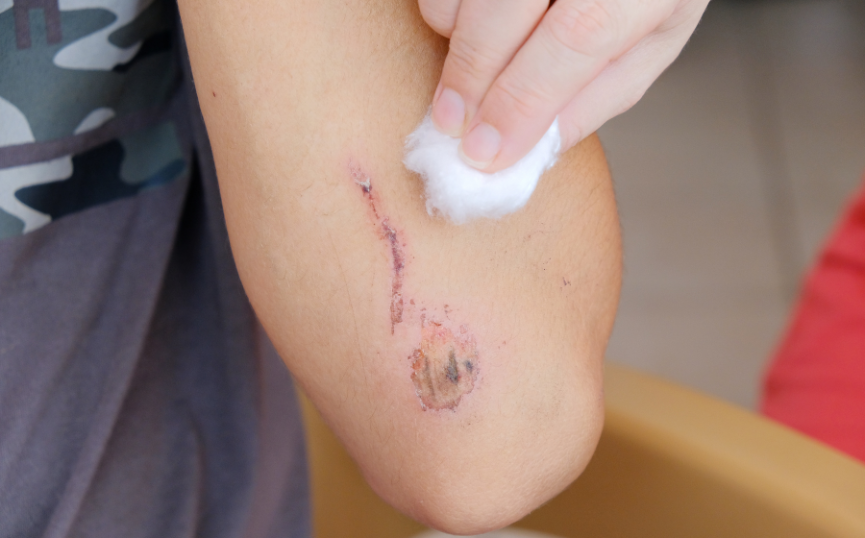
Because not every supplement is equally effective in every stage, while vitamin C and zinc are critical in almost every phase.
Arginine and glutamine are especially useful in the middle, proliferative phase.
Collagen and copper are particularly important in the final remodelling phase.
Omega-3 can be helpful in the first, inflammatory phase, but in high doses it may slow blood clotting, so it should be used with caution after surgery.
This is why it makes sense to look at supplements by the three main types of injury: cuts, burns and bone fractures.
What is recommended after cuts and surgical incisions?
The healing of cuts depends primarily on collagen synthesis, an appropriate immune response and cell division. Research has identified several nutrients that may accelerate wound closure and reduce the risk of infection.
Vitamin C (ascorbic acid)5
Vitamin C plays a key role in collagen formation and immune function. Deficiency slows wound closure. According to the literature, vitamin C supplementation may accelerate wound healing in different types of injuries.
Zinc6
Zinc is essential for DNA synthesis and cell division. Zinc deficiency has been shown to impair wound healing, while supplementation can help accelerate the process.
Arginine7
Arginine supports blood flow and nutrient delivery around the wound through nitric oxide production. Clinical studies suggest that arginine-containing formulas may accelerate wound closure and reduce inflammation.
Glutamine8
Glutamine is one of the main energy sources for rapidly dividing cells, including immune cells and fibroblasts. It may be especially useful for surgical wounds and major trauma.
HMB (β-hydroxy-β-methylbutyrate)9
HMB is produced from the breakdown of leucine. By reducing muscle breakdown and supporting protein synthesis, it can aid recovery. Several studies suggest that combined formulas containing arginine, glutamine and HMB may be particularly effective.
What is recommended for burn injuries?
Burn injuries are among the most nutrient-demanding types of trauma. The body uses extreme amounts of protein, amino acids and antioxidants for recovery. Studies suggest that targeted nutrition can significantly improve healing time and even survival.
High protein intake + essential amino acids10
Burn injuries create a catabolic state. Protein and amino acid supplementation, including arginine, glutamine and leucine, has been shown to accelerate healing.
Glutamine11
Glutamine is one of the most important supplements in burn injuries. It supports immune function, may reduce infection rates and helps accelerate wound closure.
Zinc + copper + selenium12
These minerals have antioxidant and immune-supporting roles. Zinc and copper are particularly important for collagen formation and epithelial regeneration.
Vitamins C and E13
These are powerful antioxidants that help reduce tissue damage and support collagen synthesis. In burn injuries, the need for vitamin C increases dramatically.
Omega-3 fatty acids14
Omega-3 fatty acids have anti-inflammatory effects. Some studies suggest that they may improve wound healing and reduce inflammatory markers.
What is recommended for bone fractures?
Bone regeneration has three main stages: inflammation, callus formation and bone remodelling. For this, the body needs a large amount of minerals, protein and vitamins.
Vitamin D15
Vitamin D is fundamental for calcium absorption and bone metabolism. Deficiency can slow fracture healing.
Vitamin K2 (MK-7)16
Vitamin K2 supports calcium incorporation into the bone matrix. It is more effective when combined with vitamin D.
Calcium and magnesium17
These are basic building blocks of bone formation. Supplementation is useful when the diet does not cover daily needs.
Hydrolysed collagen18
Bone is built on a collagen matrix. Collagen peptides may increase osteoblast activity and improve bone mineral density.
Arginine + glutamine + HMB combination7-9
Research suggests that this combination may be beneficial not only in soft-tissue healing but also in bone regeneration, as it supports protein synthesis and cellular energy supply.
Vitamin360’s general recovery protocol by injury type and healing phase
-
Cuts / surgical incisions
Days 1–3: Inflammatory phase
Goal: infection prevention, immune support and stabilisation of blood clotting.
Recommended:
- Vitamin C: antioxidant support
- Zinc: immune function and cell division
- Low-dose omega-3 (only if there is no post-surgical bleeding risk)
- Protein + essential amino acids
- Glutamine (energy supply for immune cells)
Avoid:
- High-dose omega-3 (due to bleeding risk)
- Excessively high doses of strong antioxidants, as inflammation is a natural process and should not be over-suppressed
- Day 3 – week 3: Proliferative phase
Goal: collagen formation, building new tissue and accelerating wound closure.
Recommended:
- Regular daily vitamin C intake
- Zinc + copper (for collagen cross-linking)
- Arginine (for improved blood flow)
- Glutamine (support for rapidly dividing cells)
- HMB + protein (to reduce catabolism)
- Collagen peptides (fibroblast activity)
- Week 3 – 12 months: Remodelling phase
Goal: strengthening the scar and reorganising collagen.
Recommended:
- Collagen peptides + vitamin C
- Zinc + copper
- Vitamin D
- Moderate omega-3
-
Burn injuries
Days 1–3: Inflammatory phase
Goal: infection prevention and reduction of oxidative stress.
Recommended:
- Very high protein intake, as burns cause extreme catabolism
- Higher vitamin C intake, as requirements rise sharply in burns
- Vitamin E (to reduce oxidative stress)
- Zinc + selenium
- Glutamine (may also reduce infection risk)
- Day 3 – week 3: Proliferative phase
Goal: new epithelial layer, granulation tissue and collagen formation.
Recommended:
- Protein or essential amino acids
- Arginine (better blood flow and immune response)
- Glutamine and/or HMB
- Zinc + copper
- Vitamin C (collagen synthesis)
- Moderate-dose omega-3
- Week 3 – 12 months: Remodelling phase
Goal: improving scar quality and restoring tissue flexibility.
Recommended:
- Collagen peptides + vitamin C
- Zinc + copper
- Vitamin D
- Omega-3
- Maintaining high protein intake, which may remain necessary long term after burn injuries
-
Bone fractures
Days 1–3: Inflammatory phase
Goal: regulating inflammation and stabilising the haematoma.
Recommended:
- Vitamin C (preparing collagen formation)
- Vitamin D (general bone metabolism)
- Protein + amino acids
- Low-dose omega-3 (inflammation modulation)
Avoid:
- Too much omega-3 (may slow blood clotting)
- Day 3 – week 3: Proliferative phase (callus formation)
Goal: building a new bone matrix.
Recommended:
- Vitamin D + K2 (calcium incorporation)
- Calcium (if diet does not cover requirements)
- Collagen peptides (the bone matrix is largely collagen-based)
- Arginine + glutamine + HMB combination (protein synthesis and cell function)
- Vitamin C (collagen formation)
- Zinc + copper (for collagen cross-linking)
- Week 3 – 12 months: Remodelling phase (bone restructuring)
Goal: increasing bone strength and forming the final structure.
Recommended:
- Vitamin D + K2
- Calcium, if needed
- Collagen peptides
- Zinc + copper
- Moderate omega-3
- Maintaining high protein intake
Which product should you choose?
There are several options for vitamin C supplementation:
- Vitamin360 C-1000 - Vitamin C 1000 mg: ideal for higher doses.
- Now Foods Vitamin C 500 mg tablets with Rose Hips: a moderate-dose dietary supplement.
- Natures Aid Vitamin C 1000 mg Time Release: a high-dose, time-release formula.
There are also several options for vitamin D supplementation:
- Now Foods Vitamin D 5000 IU: if you prefer a more moderate dose.
- Now Foods Vitamin D 10000 IU: for a higher-dose option.
Life Extension Bone Restore with Vitamin K2 - Bone Health: a complex formula for bone support, containing vitamin D, calcium, magnesium, zinc, manganese and vitamin K2. Its use may be especially important from the third week after a fracture.
OstroVit Collagen + Vitamin C: may be an ideal choice for collagen supplementation.
Vitamin360 Zinc Bisglycinate 50 mg - Organic Zinc: ideal for standalone zinc supplementation and short-term use.
Now Foods Molecularly Distilled Omega-3 Fish Oil softgels: one of the best value-for-money omega-3 dietary supplements on the market.
Swanson L-Arginine 500 mg: for supporting blood flow.
OstroVit Glutamine Powder: as a targeted active ingredient, it may help in all three injury types, especially during the proliferative phase (from day 3 to week 3).
OstroVit HMB Supreme Pure: important in similar situations to glutamine, as HMB is also related to amino acid metabolism.
Sources ⋙
- Saeg F, Orazi R, Bowers GM, Janis JE. Evidence-Based Nutritional Interventions in Wound Care. Plast Reconstr Surg. 2021 Jul 1;148(1):226-238. doi: 10.1097/PRS.0000000000008061. PMID: 34181622.
- https://austinpublishinggroup.com/nutritional-sciences/fulltext/ijns-v8-id1071.pdf
- Stanescu, C.; Chiscop, I.; Mihalache, D.; Boev, M.; Tamas, C.; Stoleriu, G. The Roles of Micronutrition and Nutraceuticals in Enhancing Wound Healing and Tissue Regeneration: A Systematic Review. Molecules 2025, 30, 3568. https://doi.org/10.3390/molecules30173568
- Saeg F, Orazi R, Bowers GM, Janis JE. Evidence Based Nutritional Interventions in Wound Care. Plast Reconstr Surg. 2021 Jul 1;148(1):226-238.
- Thevi T, et al. The Effects of Vitamin C on Wound Healing. Int J Mol Sci. 2023.
- Arribas-Lopez E, et al. Zinc and Wound Healing: A Systematic Review and Meta-Analysis. Nutrients. 2022.
- Colombo M, Milani GP. The Role of Arginine Supplementation in Wound Healing. Nutrients. 2023.
- Wischmeyer PE. Glutamine: Mode of Action in Critical Illness and Wound Healing. Nutr Clin Pract. 2020.
- Eley HL, et al. HMB Enhances Wound Healing in Clinical and Experimental Studies. Clin Nutr. 2008.
- Hart DW, et al. Effects of early enteral feeding on the metabolic response to burn injury. Ann Surg. 2002.
- Wischmeyer PE. Glutamine: mode of action in critical illness and wound healing. Nutr Clin Pract. 2020.
- Lin PH, et al. Micronutrients and wound healing. Adv Wound Care. 2018.
- Barbosa E, et al. Influence of vitamin C and vitamin E supplementation on burn wound healing. J Burn Care Rehabil. 2009.
- McDaniel JC, et al. Omega-3 fatty acids and wound healing. Adv Wound Care. 2015.
- Brinker MR, et al. Vitamin D status and fracture healing. J Orthop Trauma. 2016.
- Knapen MHJ, et al. Vitamin K2 supplementation improves bone strength in postmenopausal women. Osteoporos Int. 2013.
- Weaver CM, et al. Calcium plus vitamin D supplementation and bone health. Osteoporos Int. 2016.
- König D, et al. Specific collagen peptides improve bone mineral density and bone markers. Nutrients. 2018.

Among our articles written by our nutrition expert, you'll find product reviews and helpful tips on healthy living and prevention.
Our most popular articles: